Condition · lumbar
Spondylolisthesis Treatment in Delhi
Spondylolisthesis is a condition in which one vertebra slips forward over the one below it. Many low-grade cases cause few symptoms and are managed without surgery.
Spondylolisthesis is a condition in which one vertebra slips forward over the vertebra beneath it. The name comes from words meaning “spine” and “to slip.” It occurs most often in the lower back, and its effects range widely: many people with a small slip have few or no symptoms, while others develop back pain or, if a nerve is squeezed, symptoms in the leg. Most low-grade cases are managed without surgery.
What is spondylolisthesis?
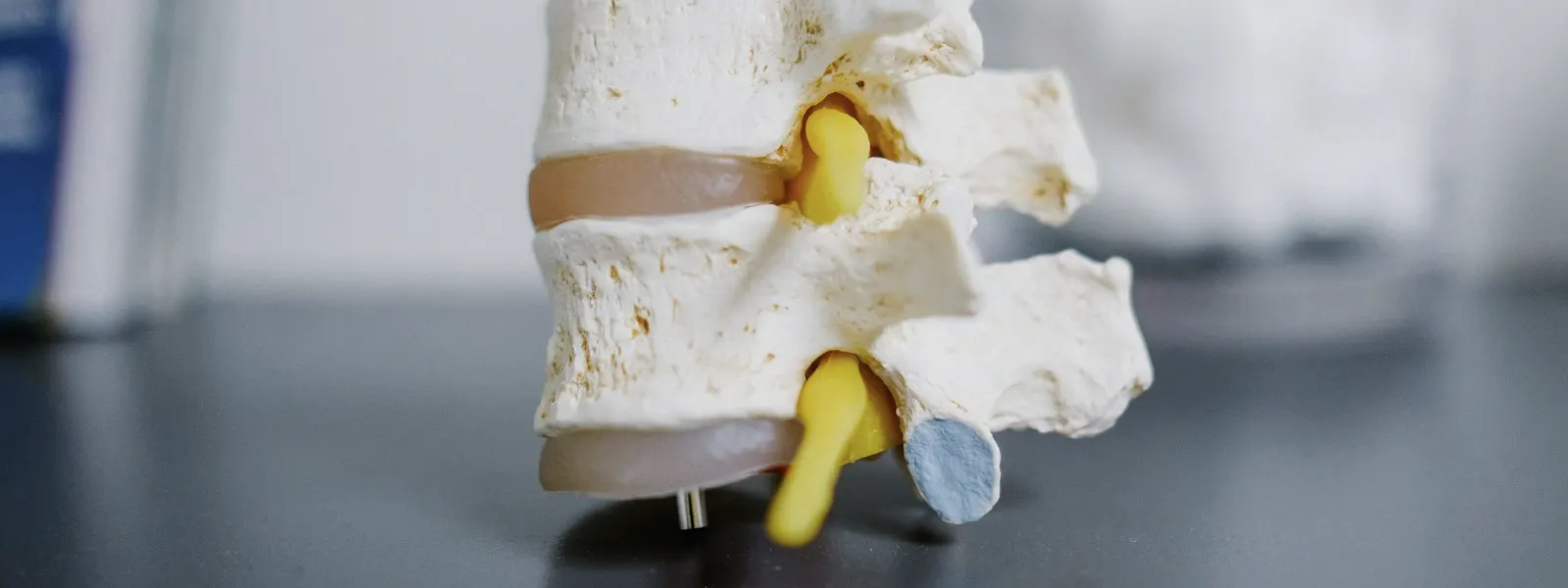
The spine is a column of vertebrae stacked one on another, held in alignment by discs, joints, and ligaments. In spondylolisthesis this alignment is lost at one level, and the upper vertebra moves forward relative to the one below. The slip can narrow the space available for the discs, the joints, and the nerves passing nearby.
How much a slip matters depends not only on its size but on whether it is causing symptoms and whether it is stable. A small, stable slip found by chance may need only reassurance and review, whereas a slip that compresses a nerve or is steadily progressing is treated differently.
Which parts of the spine are affected?
Spondylolisthesis most commonly affects the lumbar spine — the lower back — and particularly the lowest levels, which bear the greatest load. A slip at these levels can narrow the passages through which the nerves travel to the legs, which is why leg symptoms can accompany the back pain.
Types of spondylolisthesis
The two most common types are distinguished by their cause:
- Isthmic spondylolisthesis arises from a defect or stress-related break in a small bridge of bone called the pars interarticularis. It often relates to repetitive loading of the lower back earlier in life, including in some sports, and can become apparent at any age.
- Degenerative spondylolisthesis develops later in life as the discs and facet joints wear and the spine becomes less stable, allowing a vertebra to drift forward. It is more common with increasing age.
Less common forms include slips present from a developmental abnormality at birth, slips following injury, and those related to disease that weakens the bone.
Grading
Spondylolisthesis is graded according to how far the upper vertebra has slipped over the one below, from low-grade (a smaller slip) to high-grade (a larger one). Low-grade slips are by far the most common. Grading provides a consistent way to describe severity and to monitor whether a slip is changing over time. Importantly, treatment is guided by a person’s symptoms and the effect on the nerves as much as by the grade alone.
Causes and risk factors
The causes differ by type. Isthmic slips relate to a defect in the pars interarticularis, often following repetitive stress to the lower back, and there may be a familial tendency. Degenerative slips result from age-related wear of the discs and joints. Recognised contributing factors include:
- Increasing age, particularly for degenerative slips
- Repetitive or high-load activity involving the lower back, for isthmic slips
- Pre-existing degenerative change in the lumbar spine
Symptoms and warning signs
Many low-grade slips cause little trouble. When symptoms occur, the most common is lower back pain, often worse with activity, standing, or bending backwards, and eased by rest or by leaning forwards. Stiffness and tight hamstrings are frequent. Some people describe a sense of the back giving way.
If the slip narrows the space for a nerve, leg symptoms can develop — pain, numbness, tingling, or weakness travelling into the leg.
Certain features are red flags and need prompt assessment:
- Significant or worsening weakness in a leg
- Numbness around the back passage or genitals
- Difficulty passing or controlling urine, or loss of bowel control
These may indicate nerve compression that requires urgent attention.
How spondylolisthesis is diagnosed
Assessment begins with a history and physical examination, including movement, sensation, power, and reflexes in the legs. X-rays, including views taken bending forwards and backwards, confirm the slip, allow it to be graded, and can show whether it moves — an indication of instability.
Where nerve symptoms are present or surgery is being considered, an MRI shows the discs, nerves, and degree of any nerve compression, while CT gives detailed images of the bony defect and anatomy. As always, the imaging is interpreted alongside the clinical picture.
Non-surgical treatment
Most low-grade spondylolisthesis is managed without surgery, and conservative care is the starting point. It commonly includes:
- Activity modification, adjusting aggravating activities while staying generally active
- Physiotherapy and a core-strengthening programme to support and stabilise the lower back
- Pain relief, using simple analgesia and other measures as advised
- In selected cases with nerve-related leg pain, spinal injections to reduce inflammation and assist rehabilitation
These measures aim to improve symptoms and function, and many people do well with them over time.
When surgery is considered
Surgery is considered for a minority — typically when back or leg symptoms persist despite a proper trial of non-surgical care, when a nerve is significantly compressed, or when a slip is high-grade or progressing. The aim is to relieve pressure on the nerves and to stabilise the affected level; this often involves decompression combined with a fusion, such as a lumbar laminectomy and fusion.
The goal of surgery is to relieve symptoms and stabilise the spine, not to promise a particular outcome. The choice depends on the type and grade of slip, the symptoms, the state of the nerves, and overall health, and is made together.
Recovery and outlook
The outlook is generally favourable, particularly for low-grade slips, many of which remain stable and respond well to conservative care. Where surgery is needed, decompression and stabilisation can relieve symptoms effectively, though recovery timelines vary between individuals and procedures. Maintaining core strength, general fitness, and sensible activity habits supports long-term back health.
When to see a spine specialist
It is reasonable to seek a specialist opinion for back pain that persists despite conservative care, for leg pain or numbness suggesting nerve involvement, or where a slip is known to be high-grade or progressing. Urgent assessment is needed for significant or worsening leg weakness, numbness around the back passage or genitals, or any difficulty controlling the bladder or bowel.
Frequently asked questions
What is spondylolisthesis?
Spondylolisthesis is a condition in which one vertebra slips forward relative to the vertebra below it. It most commonly occurs in the lower back. The slip may be small and cause few problems, or larger and associated with back pain or, if a nerve is affected, leg symptoms.
What are the main types?
The two most common are isthmic and degenerative. Isthmic spondylolisthesis results from a defect in a small bridge of bone (the pars interarticularis) and often relates to repetitive stress earlier in life. Degenerative spondylolisthesis develops later in life as the discs and joints wear and the spine becomes less stable.
How is the slip graded?
The amount of slip is graded by how far the upper vertebra has moved over the one below, expressed in grades from low to high. Low-grade slips are the most common. Grading helps describe severity and track any change, but treatment is guided by symptoms as much as by the grade.
Does spondylolisthesis always cause pain?
No. Many people with a low-grade slip have few or no symptoms, and it is sometimes found by chance on an X-ray taken for another reason. When symptoms do occur, they commonly include lower back pain and, if a nerve is involved, pain or other symptoms in the leg.
Can it be managed without surgery?
Yes. Most low-grade cases are managed conservatively with activity advice, physiotherapy, core strengthening, and pain relief. These measures aim to improve symptoms and function. Many people do well without an operation.
When is surgery considered?
Surgery is considered when back or leg symptoms persist despite a proper trial of non-surgical care, when a nerve is significantly compressed, or when a slip is high-grade or progressing. The decision is individual and weighs symptoms, the type and grade of slip, and overall health.
Will the vertebra keep slipping?
Many slips remain stable over long periods, particularly low-grade ones. Some, especially degenerative slips, may slowly change over time. Periodic review with examination and occasional imaging is used to check whether a slip is stable or progressing.
When should I seek urgent help?
Seek urgent assessment for significant or worsening leg weakness, numbness around the back passage or genitals, or any difficulty controlling the bladder or bowel. These features may indicate nerve compression that needs prompt attention.