Condition · lumbar
Lumbar Spinal Stenosis Treatment in Delhi
Lumbar spinal stenosis is a narrowing of the spinal canal in the lower back that can compress nerves, often causing leg pain or heaviness when walking that eases on sitting or bending forward.
Lumbar spinal stenosis is a narrowing of the spinal canal in the lower back that can place pressure on the nerves travelling to the legs. A characteristic feature is leg pain, heaviness or tingling that comes on with walking or standing and eases when sitting or leaning forward. This page explains why the canal narrows, how the condition is diagnosed, and the available treatment options.
What is lumbar spinal stenosis?
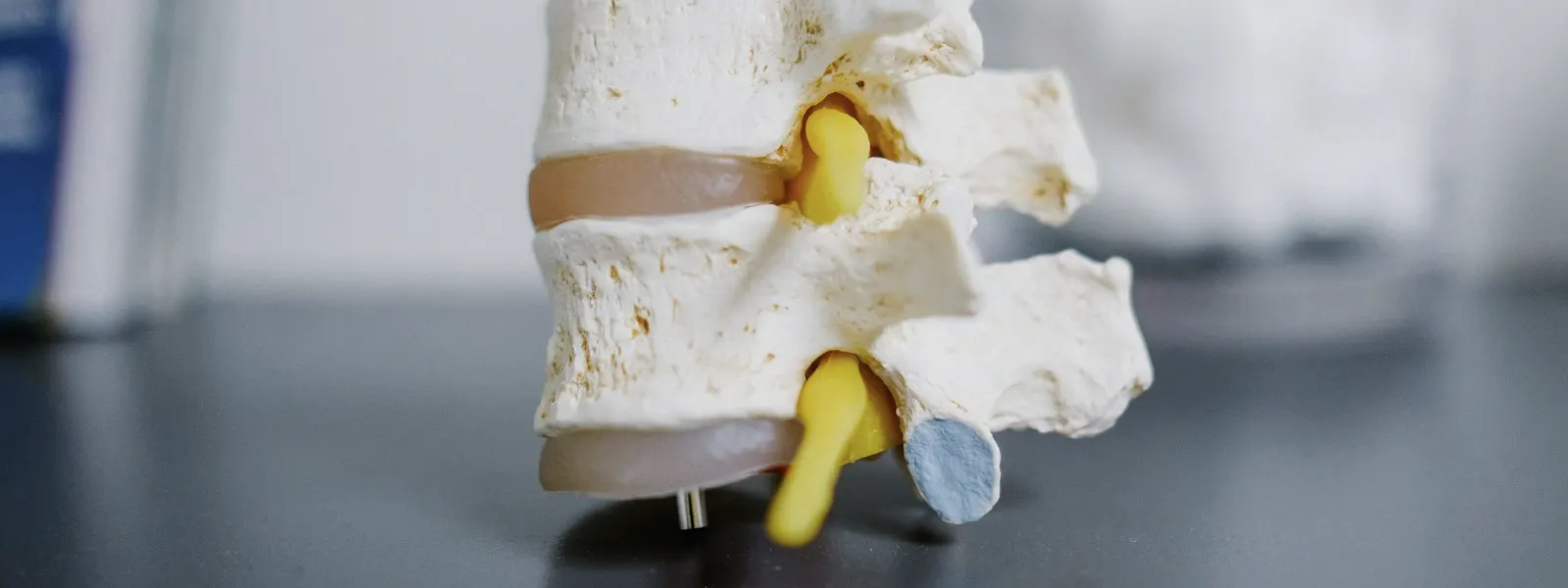
The spinal canal is the bony channel that houses and protects the spinal cord and the nerves that branch off it. In the lower back, the cord has ended and the canal contains a bundle of nerve roots. Lumbar spinal stenosis is the narrowing of this canal, which reduces the space available for those nerves.
When the space becomes tight enough to compress the nerves, it can produce pain and other symptoms in the lower back and legs. Narrowing develops slowly in most cases and is commonly part of the natural ageing of the spine. Not everyone with narrowing on a scan has symptoms.
Which parts of the spine are affected?
As the name suggests, this condition affects the lumbar spine — the lower back. The lower lumbar levels are most commonly involved, as these bear the greatest load and undergo the most wear over time.
Narrowing can occur in the central canal, in the side channels where individual nerve roots exit (the lateral recesses), or in the small openings between vertebrae (the foramina). The location of narrowing influences which symptoms develop. Stenosis can also occur in the neck (cervical stenosis), but that is a separate condition.
Causes and risk factors
The most common cause is degenerative change — the gradual wear that accompanies ageing. Contributing factors include:
- Disc changes, where discs lose height and bulge, reducing canal space.
- Thickening of the ligaments that line the canal.
- Bone spurs (osteophytes) that form as joints degenerate.
- Enlargement of the facet joints at the back of the spine.
- Spondylolisthesis, where one vertebra slips forward on another.
Less commonly, stenosis can result from a congenitally narrow canal, previous injury or surgery, or other conditions affecting the spine. Increasing age is the main risk factor, and the condition is more frequent in older adults.
Symptoms and warning signs
The hallmark of lumbar spinal stenosis is neurogenic claudication — leg symptoms brought on by walking or standing. Typical features include:
- Pain, heaviness, cramping or tiredness in the buttocks, thighs or calves when walking or standing for a time.
- Relief on sitting down, leaning forward, or bending the spine slightly — for example, leaning on a shopping trolley or walking uphill.
- Numbness or tingling in the legs.
- A gradually reduced walking distance before symptoms appear.
- Lower back pain, which may or may not be prominent.
Red-flag warning signs that require urgent attention include new or rapidly progressing weakness in the legs; numbness around the saddle area (genitals, inner thighs and buttocks); loss of bladder or bowel control or difficulty passing urine; or severe pain with fever or unexplained weight loss. These may indicate significant nerve compression, including cauda equina syndrome, or another serious cause, and need emergency assessment.
How lumbar spinal stenosis is diagnosed
Diagnosis starts with a history and physical examination. The clinician asks about the pattern of leg symptoms, the relationship to walking and posture, and walking distance. The examination checks strength, sensation, reflexes and circulation, partly to distinguish nerve-related from circulation-related leg symptoms.
Imaging confirms the diagnosis and defines the level and severity:
- MRI is the main investigation, giving detailed views of the nerves, discs, ligaments and the degree of canal narrowing.
- CT, sometimes with a contrast study (CT myelogram), is used when MRI is unsuitable or more bony detail is needed.
- X-rays, including flexion and extension views, show alignment and instability such as spondylolisthesis.
Findings are always interpreted alongside symptoms, as narrowing is common on scans of older adults who have no symptoms.
Non-surgical treatment
Many people with lumbar spinal stenosis are managed without surgery, and conservative care is generally the first approach. Options include:
- Physiotherapy and exercise, often emphasising activities that keep the spine slightly flexed, core strengthening, and maintaining general fitness.
- Activity modification, using posture and pacing strategies that reduce symptoms during daily tasks.
- Pain management, with simple analgesia or other medication as advised by a clinician.
- Spinal injections in selected cases, which may temporarily reduce nerve-related symptoms and support rehabilitation.
- Weight management and general health measures, which can reduce load on the spine and improve walking tolerance.
The aim is to control symptoms and maintain function, recognising that conservative care does not reverse the narrowing itself.
When surgery is considered
Surgery is considered when symptoms are persistent and limiting despite an adequate trial of conservative care, or when there is significant or progressive nerve compression. Emergency surgery is occasionally needed for severe nerve problems such as cauda equina syndrome.
The most common procedure is a decompression, in which bone and thickened ligament are removed to create more space for the nerves, sometimes called a laminectomy. If there is associated instability or slippage, decompression may be combined with a fusion to stabilise the affected segment. The choice of procedure depends on the pattern of narrowing, the presence of instability and individual factors, and is decided together with a spine specialist after weighing the benefits and risks.
Recovery and outlook
The course of lumbar spinal stenosis varies. Many people manage their symptoms well for years with non-surgical care and remain reasonably active. When surgery is performed for appropriate indications, decompression can relieve leg symptoms and improve walking tolerance, followed by a structured recovery and rehabilitation programme.
Recovery and results depend on many individual factors, including age, general health and the severity of nerve involvement. This page offers general information and does not predict the outcome for any one person.
When to see a spine specialist
It is reasonable to seek assessment if leg symptoms on walking are limiting your activities, if your walking distance is steadily reducing, or if back and leg symptoms are not improving with initial measures. A specialist can confirm the diagnosis, distinguish it from other causes of leg symptoms, and explain the appropriate options.
Seek urgent medical care if you develop new or worsening leg weakness, saddle numbness, or any loss of bladder or bowel control, as these warning signs require immediate evaluation.
Frequently asked questions
Why do my legs feel better when I sit down or lean forward?
Bending forward slightly opens up the spinal canal and creates more room for the nerves, which often eases leg symptoms. This is why many people with lumbar spinal stenosis find relief when sitting, leaning on a trolley, or walking uphill, and notice symptoms returning when standing upright or walking on the flat. This pattern is a characteristic feature of the condition.
Does lumbar spinal stenosis always need surgery?
No. Many people are managed successfully without surgery using exercise, physiotherapy, activity adjustment and, in some cases, injections. Surgery is considered when symptoms are persistent and limiting despite conservative care, or when there are significant or progressive nerve symptoms. The decision is individual.
Is walking good or bad for spinal stenosis?
Staying active is generally encouraged, but some people find walking on the flat brings on leg symptoms. Activities that keep the spine slightly flexed, such as cycling or using a stationary bike, are often better tolerated. A physiotherapist can suggest a programme that maintains fitness within your comfort.
What is the difference between neurogenic and vascular claudication?
Both cause leg symptoms on walking. In neurogenic claudication, from spinal stenosis, relief usually comes from bending forward or sitting rather than simply stopping, and symptoms can vary with posture. In vascular claudication, from poor circulation, symptoms typically ease soon after stopping regardless of posture. A clinician distinguishes between them through examination and tests.
Will spinal stenosis get worse over time?
Because it is usually related to age-related changes, stenosis can progress slowly, but the course varies and many people remain stable for long periods. Symptoms do not always worsen steadily. Regular review helps track any change and adjust treatment.
Can lumbar spinal stenosis be cured without surgery?
Non-surgical treatment does not reverse the narrowing itself, but it can often control symptoms and maintain function. Many people manage well for years with exercise, physiotherapy and activity strategies. Surgery is reserved for those whose symptoms remain limiting despite these measures.
How long can I wait before deciding on treatment?
For most people, lumbar spinal stenosis is not an emergency, and there is usually time to try conservative care and consider options. However, new or worsening weakness, or any loss of bladder or bowel control, should be assessed urgently. Your specialist can advise on the right pace for your situation.