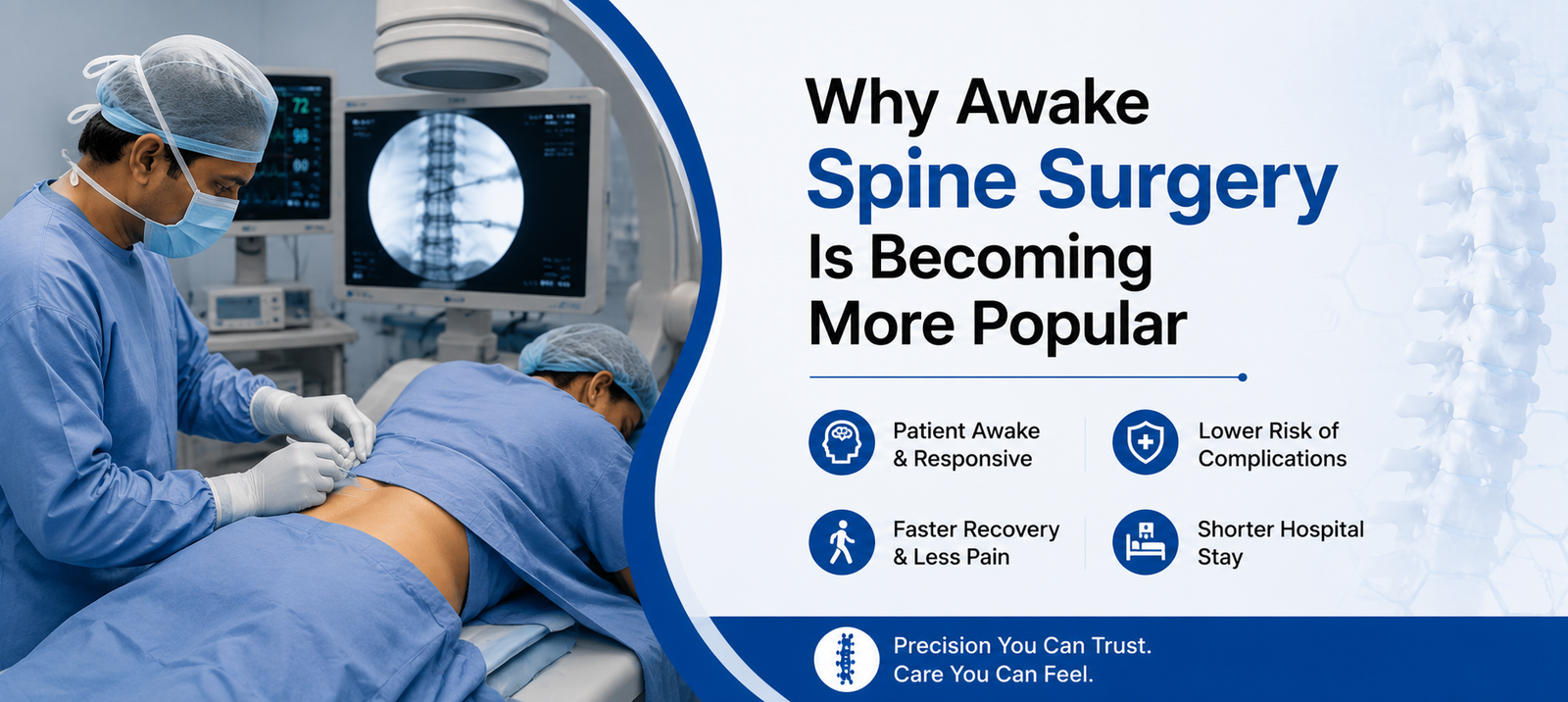
For years, the concept of spine surgery has been associated with long recovery periods, general anesthesia, and an uncomfortable recovery. So, it is not surprising that many patients opt not to get treatment, preferring to suffer from chronic back pain rather than go through a complicated procedure. That's no longer the case today.
With the development of minimally invasive techniques, there is now an innovative approach known as awake spine surgery, which means that some procedures may be performed with the patient awake under local or regional anesthesia. When used for patients carefully selected for the procedure, this can help minimize surgical risks, shorten hospital stays, and facilitate a quicker spine surgery recovery.
So, why is this becoming the preferred treatment for more patients and spine specialists? Let's delve into the reasons why it's becoming so popular and how it's transforming modern back pain treatment.
What Is Awake Spine Surgery?
When performed using local anesthesia and light sedation instead of general anesthesia, the surgery is known as awake spine surgery, which is a minimally invasive surgical technique. Patients are not totally asleep but will be relaxed and comfortable during the procedure.
It is often used to treat specific types of spinal conditions that can be treated with minimal access, such as herniated discs, spinal stenosis, and nerve compression disorders. Patients breathe on their own, which may cause less strain on the body than traditional surgery.
Although this technique isn't appropriate for all patients with spinal disease, it has expanded in the number of patients in whom it can be used due to continued advances in surgical technology.
Why Is Awake Spine Surgery Becoming More Popular?
The increasing popularity of awake spine surgery is a result of both medical advancements and patient-focused treatments. Surgeons and patients alike are beginning to see its potential to make a difference in the overall surgical experience.
1. Faster Recovery After Surgery
One of the major reasons patients opt for this procedure is the potential for quicker recovery after surgery. Many patients are able to walk sooner after surgery, with less post-operative fatigue, and may return home sooner, sometimes on the same day or within 24 hours, depending on the procedure and individual circumstances.
However, the amount of time it takes to recover depends on each person. Earlier mobility can contribute to greater comfort and confidence during the recovery process.
2. Reduced Risks Associated With General Anesthesia
General anesthesia is safe for the majority of patients, but it may involve additional considerations for older adults and patients with some types of heart, lung, and other medical problems.
Awake spine surgery can lower exposure to some of the complications associated with general anesthesia by using local or regional anesthesia with mild sedation. Patients may also experience fewer side effects such as nausea, dizziness, or grogginess following the procedure.
This can help make surgery less frightening and more manageable for many individuals.
3. Smaller Incisions and Less Tissue Damage
Modern minimally invasive techniques involve much smaller incisions than traditional open spine surgery.
Surgeons use specialized tools to access the area being treated with minimal disruption to surrounding tissue rather than cutting through large portions of muscle. This can lead to the following potential benefits:
- Reduced blood loss
- Less post-operative pain
- Reduced likelihood of infection
- Smaller surgical scars
- More rapid return to daily activities
All of these potential benefits can help make recovery easier.
4. Better Patient Engagement During Surgery
One particular benefit of awake spine surgery is that surgeons may be able to communicate with the patient at certain points during the surgery.
Feedback from a patient can be helpful in carefully selected cases to assess whether nerves are functioning normally, thereby helping to minimize the risk of nerve irritation. This communication may also support more precise surgery.
Knowing what is happening during treatment can also help alleviate anxiety and boost confidence in the treatment for many patients.
Who May Benefit From Awake Spine Surgery?
This method has many potential benefits, but it is not appropriate for everyone. Suitability depends on the nature of a spinal condition, overall health, and the complexity of the procedure.
Patients who may be considered for awake spine surgery include those who have:
- Herniated discs causing chronic pain
- Lumbar spinal stenosis
- Pinched nerves
- Persistent lower back pain that has not responded to conservative treatment
- Some progressive spinal conditions
An awake spine surgery evaluation, which includes a detailed assessment and appropriate imaging studies, will be conducted by a spine specialist before the decision is made to use awake spine surgery.
How Does Awake Spine Surgery Improve Back Pain Treatment?
Conventional back pain treatment typically starts with non-surgical methods such as physical therapy, medications, lifestyle modifications, and spinal injections. These treatments are beneficial to many patients, but they do not work for everyone.
Awake spine surgery is another treatment pathway for patients who continue to experience symptoms after conservative treatment. It can help bridge the gap between symptom management and more invasive surgical approaches.
The procedure is aimed at relieving pain caused by nerve compression or other treatable spinal problems. Many appropriately selected patients may experience significant pain relief, improved mobility, and an improved quality of life.
The aim is to achieve a return to normal function and help patients resume their normal activities as comfortably as possible, rather than relying only on symptom management.
Final Thoughts
As awake spine surgery becomes a more popular procedure, the shift toward patient-centered healthcare, minimally invasive procedures, and advancements in spine surgery technology is gaining traction. This innovative approach is reshaping the treatment of certain spine conditions by reducing dependence on general anesthesia, minimizing tissue disruption, and facilitating a smoother spine surgery recovery.
However, awake spine surgery is not suitable for everyone. For patients who fit the appropriate clinical parameters, it can be an important option within modern back pain treatment.
If your back or leg pain is persistent and interfering with your ability to live your life normally, consider visiting a spine specialist with extensive experience in treating spine conditions. An individualized assessment can help determine whether awake spine surgery is the right choice to help you move more comfortably and regain your quality of life.
Concerned about your spine health?
Get an expert opinion from Prof. (Dr.) Bhavuk Garg — Max Hospital Delhi, Ex-AIIMS.
Book a Consultation WhatsApp UsOr send your query