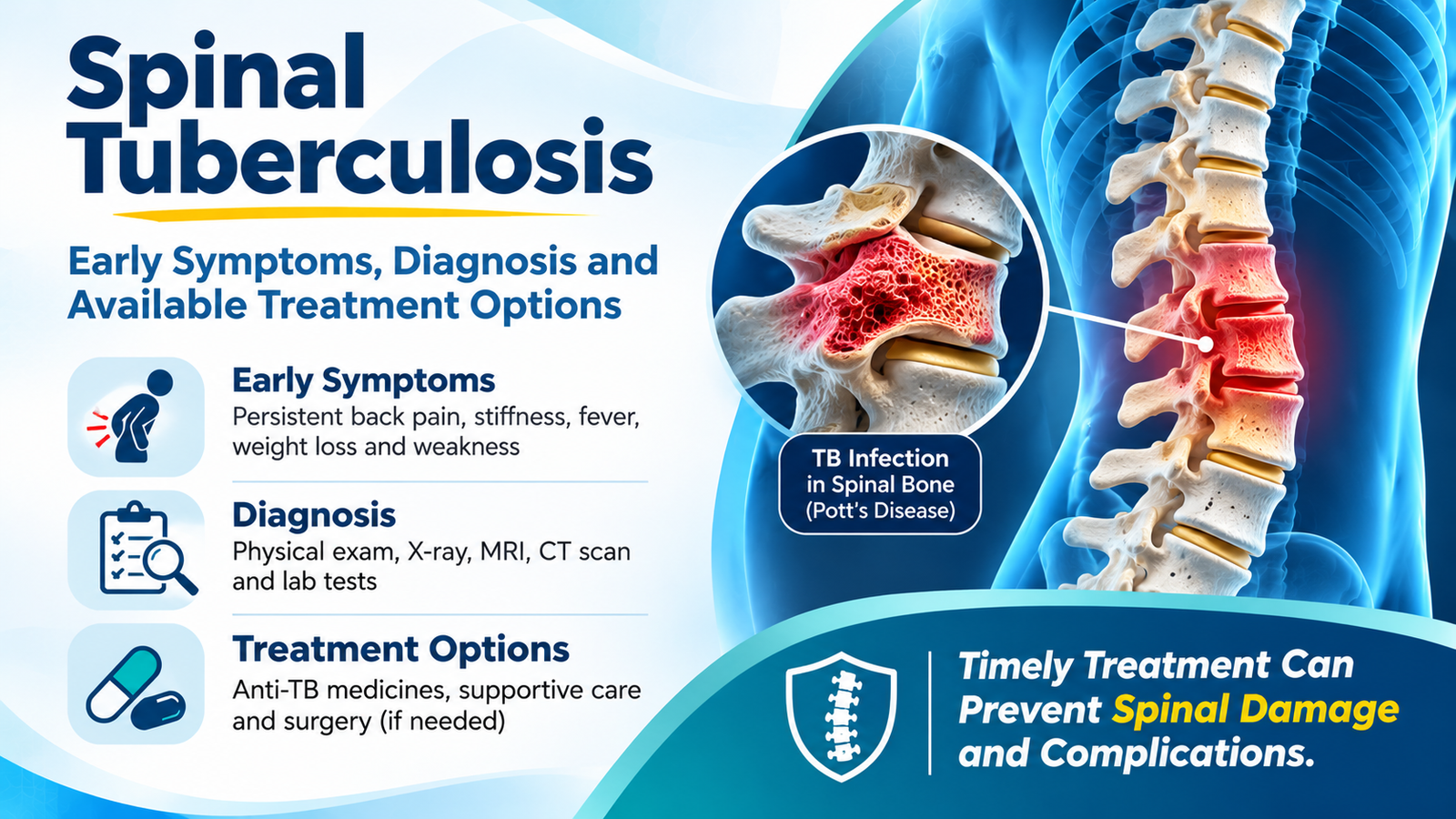
Tuberculosis (TB) usually affects the lungs, but you will be surprised to know that it can also affect other parts of the body, including the bones and joints. When TB affects the spine, it is called spinal tuberculosis or Pott’s disease. It is a serious condition that can damage the spinal bones, leading to severe back pain and affecting the nerves.
The infection usually develops slowly, and it can be difficult to identify its symptoms early. Many people experience back pain for weeks or months before finding the real cause. Early diagnosis and proper treatment are important to prevent spinal damage and other complications.
Knowing the symptoms, diagnostic tests, and treatment options can help patients seek the right spinal tuberculosis treatment in Delhi in a timely manner. If you want to know more about spinal tuberculosis, read this post. We will discuss everything about Spinal TB, including its early symptoms, diagnosis, complications, and TB spine treatments in India. Let’s dive in!
Understanding Spinal Tuberculosis – What Is It?
Spinal tuberculosis is a type of bone TB. It develops when Mycobacterium tuberculosis, the bacteria that cause TB, infects the bones of the spine. The infection usually starts from the lungs and reaches the bones through the bloodstream. However, it can also develop without noticeable lung symptoms.
It initially affects the bones at the front of the spine. Gradually, the infection damages and weakens these bones, causing vertebrae to collapse. This often leads to an abnormal forward bend in the spine, known as kyphosis.
Sometimes, the infection also spreads to nearby soft tissues and forms an abscess (a collection of infected fluid). If the infection or abscess puts pressure on the spinal cord or nearby nerves, patients may develop weakness, numbness, or difficulty walking.
Spinal TB can affect people of any age but is more common in areas where tuberculosis is widespread.
Early Symptoms of Spinal Tuberculosis
Spinal tuberculosis develops slowly, and its early symptoms can easily be mistaken for common back problems. Some common early symptoms include:
1. Persistent Back Pain
Back pain is one of the earliest signs of spinal tuberculosis. It develops slowly and lasts for weeks or months. It sometimes does not even improve with rest or regular pain medication. Patients with spinal TB often experience increased pain at night or during daily activities.
2. Stiffness in the Back
Patients may also experience stiffness in the back that makes it difficult for them to bend, twist, or move their backs. Simple activities such as walking, sitting for long periods, or getting out of bed may become uncomfortable.
3. Unexplained Weight Loss
Some people with spinal TB also experience weight loss without making changes to their diet or physical activity. This usually happens because the infection affects the body's overall health and energy levels.
4. Fever and Night Sweats
Low-grade fever, especially in the evening, and excessive sweating at night are also possible symptoms. However, not everyone with spinal TB experiences these signs.
5. Fatigue and Weakness
Spinal TB can also cause tiredness, weakness, loss of appetite, and a general feeling of illness. As the infection progresses, patients may experience pain spreading to the chest, abdomen, or legs, numbness, leg weakness, difficulty walking, or changes in posture. In severe cases, it may also affect bladder or bowel control.
6. Nerve-Related Issues
Some patients may also experience nerve-related symptoms, such as numbness, tingling, muscle weakness, or difficulty walking. It usually happens when the infection affects nearby nerves or the spinal cord.
Important: All these symptoms need medical attention. Patients experiencing persistent back pain or neurological symptoms should consult a qualified doctor or spine specialist promptly.
Causes of Spinal Tuberculosis
Spinal TB is caused by the bacteria responsible for tuberculosis. The infection usually spreads from the lungs to the spine through the blood or lymphatic system. However, it can also develop without noticeable lung symptoms.
Some risk factors include:
- Weak Immune System: People with a weak immune system, diabetes, or HIV are more likely to develop active TB.
- Close Contact with Someone Who Has TB: Spending time with someone who has infectious pulmonary TB increases the risk of catching the infection.
- Previous TB Infection: TB bacteria can sometimes remain inactive in the body and become active later.
- Poor Nutrition: Poor nutrition can weaken the immune system and make it harder to fight infections.
- Living in High-TB Areas: People living in areas with a high prevalence of TB are more likely to come into contact with the bacteria.
Note: Spinal TB itself usually does not spread through physical contact. Unlike infectious lung TB, TB affecting only the spine is generally not contagious.
Diagnosis for Spinal Tuberculosis
Early diagnosis helps prevent spinal damage. Doctors use several methods, including physical examinations, imaging tests, and laboratory tests to confirm the disease and accordingly plan TB spine treatment in India.
1. Physical Examination and Medical History
An experienced spine specialist always begins by understanding the patient's symptoms. They generally ask how long the back pain has lasted and whether the patient has fever, weight loss, or night sweats. They also check spinal movement, posture, muscle strength, sensation, and reflexes.
2. X-ray
Doctors may recommend an X-ray to identify changes in the bones of the spine. X-rays show bone damage, reduced space between vertebrae, or an abnormal spinal curve. However, early spinal TB may not show clearly on X-rays.
3. MRI Scan
MRI is one of the most useful imaging tests for diagnosing spinal TB. It gives clear images of the spinal bones, discs, spinal cord, and nearby tissues. It helps doctors detect infection, abscesses, pressure on the spinal cord, and damage to surrounding areas.
4. CT Scan
A CT scan is another useful method for diagnosing spinal tuberculosis. It provides detailed images of the bones and helps doctors understand the extent of bone damage. It can also help doctors collect a tissue sample for biopsy.
5. Blood Tests
Doctors may also suggest blood tests like ESR and CRP to check for inflammation. These tests help support the diagnosis and track treatment progress, but cannot confirm spinal TB on their own.
6. Biopsy and Laboratory Tests
In some cases, doctors may take a small tissue or fluid sample (biopsy) to detect TB bacteria and check which medicines will work. Tests like GeneXpert and culture can also help identify the infection and drug resistance.
Important: An accurate diagnosis is crucial as it helps doctors choose the right spinal tuberculosis treatment in Delhi and avoid delays.
Available Treatment Options for Spinal Tuberculosis
Spinal tuberculosis is undoubtedly a serious health condition. However, the good news is that it is treatable. Early diagnosis is crucial for choosing the right TB spine treatment India.
Spinal TB treatment focuses on curing the infection, reducing pain, and preventing further damage to the spine and nerves. Treatment depends on the severity of the infection, bone damage, and the patient's overall health. Most patients need medicines, while some may require surgery.
1. Anti-Tuberculosis Medicines
Anti-tuberculosis treatment (ATT) is one of the primary treatments for spinal TB. In this treatment, doctors prescribe a combination of medicines. These medicines aim to kill the bacteria and prevent the infection from spreading.
Spinal TB treatment may last 12–18 months, depending on the patient's condition and the treating specialist's advice. Patients must complete the full course of medicines, even after symptoms have improved. This helps prevent the infection from returning or developing drug resistance.
Besides medication, spine specialists may also recommend regular tests to monitor recovery and check for side effects.
2. Supportive Treatment and Rest
Along with medicines, doctors may recommend supportive treatment to help patients recover comfortably. This may include:
- Wearing a spinal brace to support the affected area.
- Avoiding heavy lifting and activities that strain the spine.
- Eating a healthy diet rich in protein, vitamins, and minerals.
- Getting enough rest during the early stages of treatment.
- Starting guided physiotherapy when the doctor says it is safe.
Note: Long-term bed rest does not cure the condition. Gentle movement and physiotherapy, when medically appropriate, can help maintain muscle strength and improve mobility.
3. Surgical Treatment
Not every patient with spinal tuberculosis needs surgery. Doctors often recommend surgery when medicines or other treatments fail to protect the spine or when serious complications develop.
Surgery is often considered under the following circumstances:
- Severe damage to the vertebrae.
- Spinal instability or a risk of further collapse.
- Pressure on the spinal cord or nearby nerves.
- Increasing weakness or difficulty walking.
- Severe spinal deformity or an abnormal forward bend.
- Large abscesses that require drainage.
- Lack of improvement despite appropriate medical treatment.
Surgical Options for Treating Spinal Tuberculosis
Here are some surgical treatments available for patients suffering from severe spinal tuberculosis.
Decompression Surgery
In this surgery, doctors remove infected tissue or bone that puts pressure on the spinal cord or nerves. It helps reduce nerve pressure and may improve weakness and other nerve-related symptoms.
Debridement
In this procedure, infected and damaged tissue is removed to clear the affected area and help it heal.
Spinal Fusion
Spinal fusion is one of the surgical treatments used for spinal TB when the infection weakens the spine. In this surgery, surgeons join two or more vertebrae using bone grafts, screws, and rods. This helps stabilise the spine while the bones heal.
Spinal Deformity Correction
Spinal deformity correction is often suggested to patients with severe kyphosis. This surgery helps correct the spinal curve and improve balance. The procedure depends on the severity of the deformity and the patient's overall health.
Note: The surgeon may perform one or more procedures depending on the patient's condition. However, surgery does not replace TB medicines. Patients must continue their prescribed medicines after surgery to clear the infection.
Effects of Leaving Spinal Tuberculosis Untreated
Ignoring the symptoms or delaying treatment can lead to serious complications. As the infection progresses, it may damage the vertebrae and weaken the structure of the spine.
Some possible complications include:
- Spinal Deformity: Damage to the spinal bones can cause the spine to bend forward, leading to kyphosis.
- Spinal Instability: Severe bone damage can weaken the spine and affect its ability to support the body.
- Nerve Compression: Infection or damaged bone can press on the spinal cord or nerves, causing pain, numbness, and weakness.
- Difficulty Walking: Nerve damage can affect balance, movement, and walking.
- Paralysis: Severe spinal cord damage may cause partial or complete loss of movement in the legs.
- Bladder and Bowel Problems: Nerve damage may affect bladder and bowel control.
Note: Early diagnosis and proper treatment are crucial to prevent these complications. New or worsening leg weakness, difficulty walking, or loss of bladder or bowel control requires emergency medical assessment.
Recovery and Rehabilitation After Spinal Tuberculosis
Recovery from spinal TB takes time. Patients may need several months to regain strength and return to their normal activities. Following these recommendations can support recovery:
- Regular Check-ups: Visit the doctor regularly to monitor the infection and check spinal healing.
- Follow-up Tests: Get MRI scans, X-rays, and blood tests as recommended by the doctor.
- Physiotherapy: Start guided physiotherapy to improve muscle strength, flexibility, balance, and walking ability.
- Avoiding Heavy Activities: Avoid heavy lifting and strenuous activities until the doctor allows them.
- Following Medical Advice: Follow the doctor's instructions about bending, driving, and returning to work.
- Allowing Enough Recovery Time: Recovery varies from person to person. Early treatment and less spinal or nerve damage generally improve the chances of a good recovery.
Can Spinal Tuberculosis Be Prevented?
Spinal TB cannot always be prevented. However, reducing exposure to TB bacteria and identifying the infection early can help lower the risk.
Some preventive measures to reduce the risk of tuberculosis include:
- Avoiding prolonged close contact with people who have untreated infectious lung TB.
- Keeping homes and workplaces well-ventilated.
- Consulting a doctor if you have persistent back pain, unexplained fever, or weight loss.
- Getting tested and treated for TB when advised by a doctor.
- Completing the full course of prescribed TB medicines.
- Ensuring children receive the BCG vaccine as recommended under the national immunisation schedule.
The Bottom Line
Spinal tuberculosis is a serious but treatable condition that can damage the spinal bones and nerves. Symptoms such as persistent back pain, stiffness, fever, and unexplained weight loss should not be ignored. Early diagnosis is a must to ensure the right TB spine treatment in India.
Doctors diagnose the problem mainly through physical examination, scans, and laboratory tests. Early diagnosis helps doctors plan the right spinal tuberculosis treatment in Delhi and prevent further damage to the spine.
Most patients are treated with anti-TB medicines; however, some may require surgery to relieve nerve pressure or stabilise the spine. With timely treatment, regular check-ups, and proper rehabilitation, spinal TB patients can recover and return to daily activities.
However, it is crucial to visit an experienced spine specialist to ensure appropriate treatment. Dr. Bhavuk Garg is a spine specialist in Delhi. He is currently Principal Director & Head – Orthopaedics & Spine at Max Hospital, Delhi.
Concerned about your spine health?
Get an expert opinion from Prof. (Dr.) Bhavuk Garg — Max Hospital Delhi, Ex-AIIMS.
Book a Consultation WhatsApp UsOr send your query