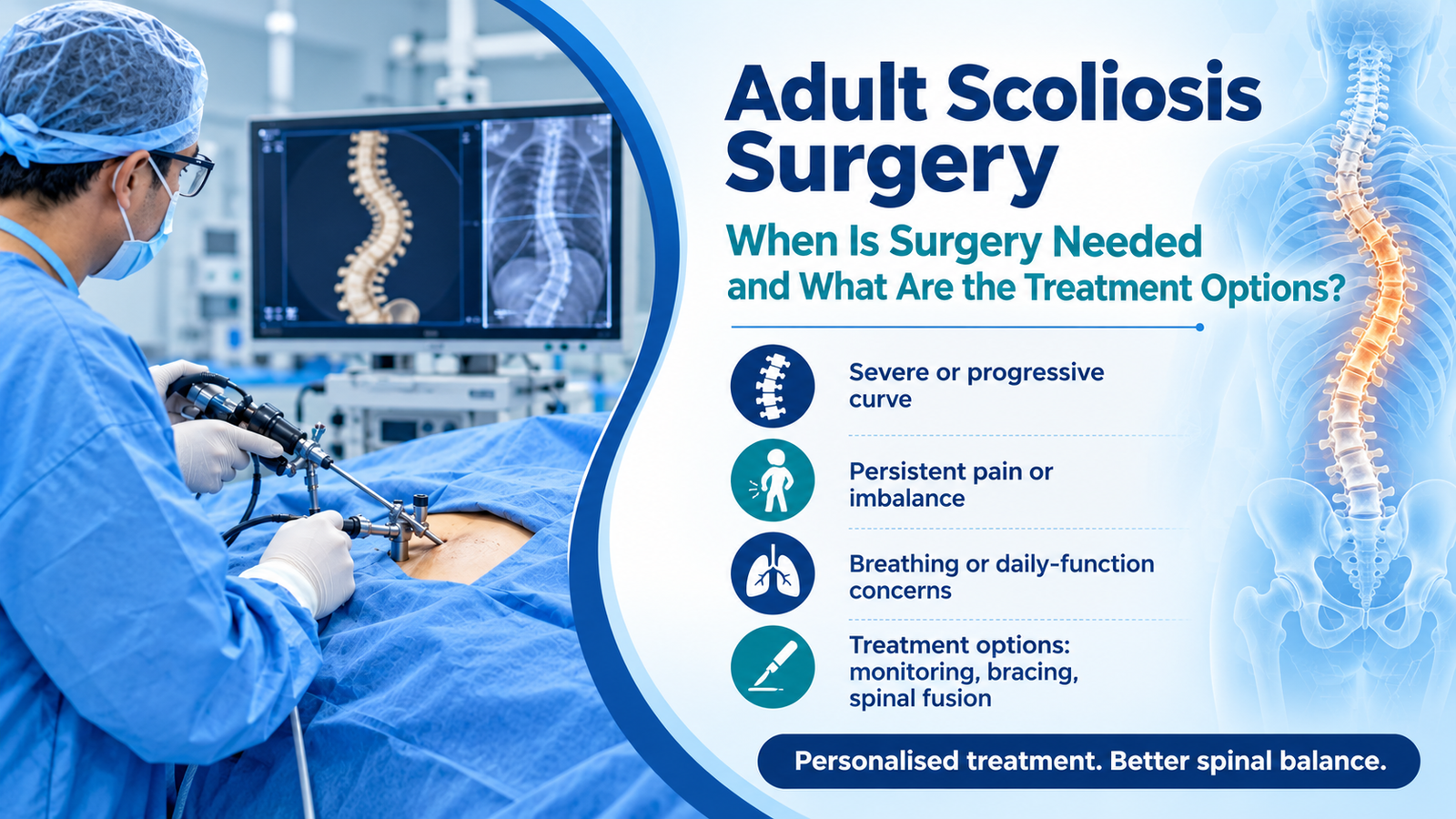
Among several spinal deformities, scoliosis is a common condition that people suffer with. Often, it leads to back pain, stiffness and difficulty standing or walking. Some patients can manage their symptoms with medicines, physiotherapy and exercises, while others may need adult scoliosis surgery in Delhi if the spinal curve becomes severe or starts affecting their daily activities. The choice of treatment; however, depends on the patient's condition, the severity of the curve and overall health. In this post, we have outlined the causes, symptoms and treatment options to help patients make better decisions about their health. Let’s dive in…
Understanding Scoliosis – What is it?
Scoliosis is a condition in which the spine curves sideways instead of remaining straight. More often than not, it is diagnosed during childhood or teenage years, but adults can also develop it. Some people have scoliosis from an early age, while others develop it later due to age-related changes in the spine. Adult scoliosis can lead to back pain, stiffness and difficulty standing or walking for long periods. These problems may get severe as the condition gets worse or over time and that’s when spine specialist in Delhi recommend surgery.
Types of Scoliosis in Adults
There are mainly two types of adult scoliosis:
- Adult idiopathic scoliosis: Some adults develop scoliosis during childhood or teenage years. The curve may stay the same for years but can worsen with age.
- Degenerative scoliosis: This type of scoliosis develops with age as the discs and joints in the spine wear down. These changes can affect the spine's balance and cause it to curve sideways.
Besides that, factors like osteoporosis, previous spinal injuries and certain medical conditions, may also contribute to spinal deformities.
Common Symptoms of Adult Scoliosis
Adult scoliosis symptoms depend on the severity of the curve. Some people have no pain, while others experience extreme discomfort and difficulty moving. Some of the most common symptoms include:
- Back pain: Persistent pain in the lower or middle back.
- Uneven shoulders or hips: One shoulder or hip may become uneven or appear higher than the other.
- Changes in posture: The body may start to lean to one side. This makes it difficult for patients to stand or walk straight.
- Leg pain or numbness: Pressure on the nerves often lead to pain, tingling or weakness in the legs.
- Difficulty walking: Some patients may find it difficult to walk for long periods or maintain their balance.
- Reduced flexibility: Bending, twisting and performing everyday activities may become a task with adult scoliosis.
More often than not, these symptoms are handled using non-surgical methods. However, if these symptoms continue or become worse, a spine surgeon in Delhi may suggest adult scoliosis surgery in Delhi.
Diagnosing Scoliosis in Adults
Before recommending any treatment, a spine specialist in Delhi assesses the overall condition of the patient. They conduct several tests and physical examinations to evaluate the patient’s condition and determine the right course of action. Assessment is done on the basis of:
- Physical examination: The doctor checks posture, spinal alignment, movement, muscle strength and balance.
- X-rays: Full-length standing X-rays is generally taken to assess overall spinal balance. They help measure the spinal curve and check whether it has changed over time.
- MRI scan: In some cases, an MRI is also done. MRI scan helps identify nerve compression, disc problems and other soft tissue changes.
- CT scan: A CT scan is done when detailed images of the spinal bones is required to determine surgical planning.
Besides these, the best spine specialist doctor in Delhi also reviews the patient's medical history, existing general health conditions and ability to undergo a major operation.
When Is Adult Scoliosis Surgery in Delhi Recommended?
Surgery is not the first treatment for every adult with scoliosis. Spine specialists often begin with non-surgical treatments. Only when the condition becomes severe or the symptoms become unmanageable with non-surgical treatments, surgery is recommended. Surgery may be considered in the following situations:
1. Severe or Persistent Back Pain
If a patient experiences constant back pain because of which daily activities like sleeping, working and walking becomes difficult, an orthopedic spine specialist in Delhi suggests surgery.
2. Non-Surgical Treatments Become Ineffective
If medicines, physiotherapy and other treatments do not provide enough relief, surgery may be considered.
3. The Spinal Curve Continues to Increase
If the spinal curve continues to progress over time, it can affect the body's balance and put additional pressure on the spine. In such situation, doctors often recommend surgery to correct the deformity and prevent further deterioration in suitable patients.
4. Nerve Compression
In some adults, scoliosis can put pressure on the spinal nerves, causing leg pain, numbness, tingling or weakness. If these problems become severe or do not improve with other treatments, doctors may recommend surgery.
5. Difficulty Standing or Walking
A severe spinal curve can affect the body's natural balance. Patients may lean forward or to one side. This hampers their ability to stand or walk comfortably. If that happens, doctors suggest adult scoliosis surgery in Delhi as it helps improve spinal alignment and make movement easier.
6. Adverse Effect on Life
When scoliosis affects daily activities, independence, or quality of life, surgery may be considered. The decision depends on the patient's symptoms, overall health, spinal condition and the expected goals.
Non-Surgical Treatment Options for Adult Scoliosis
Before recommending surgery, doctors usually consider different non-surgical treatments to help manage pain, improve movement and make everyday activities easier. Some of the best options include:
1. Medication
There are several medicines available that help adults with scoliosis get rid of the pain. These pain-relieving medicines are meant to manage back pain and inflammation. The choice of medicine depends on the patient's age, symptoms, severity and general health.
* Any medication, especially the stronger ones should only be taken under medical supervision.
2. Physiotherapy and Exercises
Physiotherapy and certain exercises also help strengthen the muscles supporting the spine and improve flexibility. Patients are often suggested exercises based on their condition and physical ability.
* Gentle exercises can reduce stiffness and improve posture, but they usually do not correct an existing spinal curve.
3. Spinal Injections
If a patient with scoliosis experience nerve-related pain, doctors may recommend spinal injections containing steroids and local anaesthetic. These injections can help reduce inflammation around the affected nerves and provide temporary relief.
* Spinal injections do not provide permanent relief from persistent pain or discomfort. They only provide momentary relief and should only be given under medical supervision.
4. Back Braces
Some patients with adult scoliosis are also recommended to wear back braces. Back braces are meant to provide support and reduce back pain.
* Braces rarely correct spinal curves in adults but may offer short-term support when surgery isn't suitable.
What Are the Surgical Treatment Options for Adult Scoliosis?
Different surgical treatments available to correct adult scoliosis include:
1. Spinal Decompression Surgery
Spinal decompression surgery is one of the most popular adult scoliosis surgeries in Delhi. It is often recommended when scoliosis puts pressure on the spinal nerves. In this procedure, the surgeon removes small portions of bone or other tissues pressing on the nerves. This is done to create more space for the nerves and helps reduce leg pain, numbness and tingling.
Decompression surgery may be suitable for patients with smaller curves and a stable spine. Patients with severely curved or unstable spine may need to undergo more advanced procedures.
2. Spinal Fusion Surgery
Spinal fusion is one of the most common surgical procedures used to treat adult scoliosis. This is done using screws and metal rods. They help hold the spine in the correct position. A bone graft is also used to help two or more bones join together over time. This helps stabilise the spine, improve its alignment and prevent further movement. This procedure is sometimes combined with decompression surgery to relieve pressure on the nerves.
3. Osteotomy
In case of severe adult scoliosis, spine specialists in Delhi may recommend Osteotomy may. It helps realign the spine, which cannot be done using simple procedures. In this procedure, the surgeon carefully removes or cuts a portion of bone to correct the spinal position. It is usually recommended for complex cases where regular spinal fusion may not be enough. The procedure depends on the patient's spinal condition and the correction needed.
4. Minimally Invasive Scoliosis Surgery
Adult scoliosis surgery in Delhi is also performed using minimally invasive techniques. Such treatments involve smaller incisions and are done using specialised instruments and imaging equipment. Minimally invasive procedure mainly targets the affected part of the spine. This significantly reduces damage to the surrounding muscles, blood loss and hospital stay in suitable cases. However, not every patient makes a suitable candidate for minimally invasive spinal surgeries. It is crucial to consult a highly experienced spine specialist for the procedure.
These surgical treatments are often suggested when non-surgical treatments do not provide enough relief. The choice of procedure; however, depends on the type, size and location of the curve, nerve compression, spinal stability and the patient's overall health.
Risks and Complications of Scoliosis Surgery in Adults
Usually, scoliosis surgery is a safer option; however, it also involves certain risks. Some of the possible risks include:
- Infection around the surgical area.
- Blood loss during the procedure.
- Blood clots after surgery.
- Nerve injury, which can lead to weakness or numbness.
- Problems with screws or rods (such as loosening or breakage).
- Failure of the bones to fuse properly.
- Continued back pain even after surgery.
The chances of complications depend on the patient's age, general health, severity of the spinal curve and type of surgery performed. However, patients are advised to discuss these risks with their surgeon before making a decision.
* Surgery can improve spine alignment and reduce symptoms, but it may not completely relieve back pain.
Recovery After Adult Scoliosis Surgery
Recovery from scoliosis surgery takes time and depends on the type of surgery. Patients may need to stay in the hospital for a few days or longer, depending on their recovery. During the initial recovery period, patients may be asked to:
- Walk short distances with assistance.
- Avoid heavy lifting and sudden twisting movements.
- Follow a prescribed pain management plan.
- Attend follow-up appointments.
- Start physiotherapy as advised by the doctor.
*Patients who undergo spinal fusion may take several months to recover, as the bones need time to join together. Full recovery can take a year or longer in some cases. It is crucial to follow your doctor’s instructions and attend regular check-ups for a safe recovery.
The Bottom Line
So, this is all about adult scoliosis. Adult scoliosis is not always corrected with surgery. Many people can manage their symptoms with medicines, physiotherapy, exercises and other non-surgical treatments. Spine specialists only recommend adult scoliosis surgery in Delhi when the spinal curve becomes severe, pain continues despite treatment, nerve compression develops or the condition starts affecting everyday activities. It is crucial to consult an experienced spine specialist in Delhi. An expert spine specialist, such as Dr. Bhavuk Garg will always assess your spinal condition, symptoms, age and overall health before recommending a surgery. Dr. Bhavuk Garg is a renowned spine specialist who offers outstanding spinal treatments for patients struggling with spinal problems. Book a consultation with Dr. Bhavuk Garg for further assessment.
Concerned about your spine health?
Get an expert opinion from Prof. (Dr.) Bhavuk Garg — Max Hospital Delhi, Ex-AIIMS.
Book a Consultation WhatsApp UsOr send your query